Short Term Rental Investing in Bradenton, Sarasota & the Gulf Islands: A Complete Guide
The Gulf Coast corridor from Bradenton through Sarasota — including Anna Maria Island and Siesta Key — is one of Florida’s most compelling short term rental markets. World-class beaches, year-round warm weather, and proximity to major metro areas create consistent demand that most seasonal markets can only dream about. But this market has layers: strict island regulations, varying sub-market dynamics, and entry points ranging from accessible mainland condos to seven-figure beachfront homes.
This guide breaks down the revenue data, regulations, sub-markets, and strategy you need to invest here intelligently.
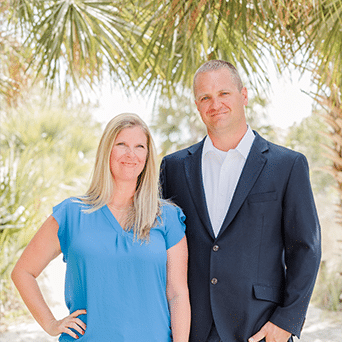
Meet the Top Local Agents
Expert Guidance in the Heart of the Bradenton
The Short Term Shop has helped more than 5,000 investors purchase over $2.5 billion in short-term rental properties nationwide. We are the #1 team at eXp Realty and ranked among the Top 20 real estate teams in the United States according to The Wall Street Journal and RealTrends.
Our local Florida agents understand the Bradenton market, including zoning considerations, short-term rental regulations, HOA restrictions, and which neighborhoods consistently perform well as vacation rentals. When you work with The Short Term Shop, you gain access to national STR expertise combined with local Gulf Coast insight.
Listen to the Bradenton Podcast Series
Explore our 12-episode podcast series focused entirely on short term rental investing in the Bradenton. From choosing the right neighborhood to furnishing and managing your property, we walk you through it all.
Get Full Training + Support with STS+
Every Short Term Shop client gets access to STS+, our exclusive investor training platform with onboarding, systems, and coaching to help you self-manage like a pro.
Search Bradenton Cabin Listings
Browse real-time listings of available homes across Bradenton, whether you’re searching for a cabin or single-family home near the Bradenton.
Market Overview

The Bradenton-Sarasota corridor sits on Florida’s central Gulf Coast, stretching from the barrier islands (Anna Maria Island and Siesta Key) through the mainland communities of Bradenton and Sarasota. It’s a market defined by contrasts — tiny islands with fierce supply constraints next to a growing metro area with more accessible price points.
Why this market works for STR investors:
- Year-round demand. Unlike Florida Panhandle markets that lean heavily on summer, the Bradenton-Sarasota area draws visitors 12 months a year. Snowbirds fill winter months, families drive summer, and shoulder seasons stay active thanks to mild weather and events.
- Multiple feeder cities. Tampa Bay metro (under an hour north), Orlando (about two hours east), and the entire Southeast snowbird corridor feed guests into this market consistently.
- No state income tax. Florida’s tax-friendly environment means more of your rental income stays in your pocket.
- State preemption on STR bans. Florida state law prevents local municipalities from outright banning short term rentals — a critical protection that many other states lack. [VERIFY: Confirm current status of Florida SB 280 / preemption provisions and any recent legislative changes]
- Beach quality that markets itself. Siesta Key has been ranked the #1 beach in America (Dr. Beach). Anna Maria Island consistently lands on “best beach” lists. This isn’t a market where you need to convince guests to visit.
The market has roughly 257+ active short term rental listings across bedroom configurations, with the heaviest concentration in 3-bedroom properties. It’s a mid-sized market — large enough for solid data but not so saturated that you’re fighting for scraps.
Revenue Potential
Here’s what properties in the Bradenton-Sarasota market are actually generating:
Short Term Rental Revenue by Bedroom Count
Bedroom Count | Market Average Revenue | Average Daily Rate | Occupancy Rate | Active Listings | Top Performer Revenue (90th Percentile) |
|---|---|---|---|---|---|
1 Bedroom | $44,000 | $190 | 70% | 82 | $66,000–$73,000 |
3 Bedroom | $74,030 | $305 | 73% | 148 | $111,000–$123,000 |
5 Bedroom | $130,360 | $545 | 71% | 27 | $195,000–$218,000 |
What the data tells you:
- 3-bedroom properties dominate the market with 148 listings — the largest category by far. This is your bread-and-butter configuration for families visiting the beaches.
- Occupancy is remarkably consistent across bedroom counts (70–73%), confirming the year-round demand thesis. Compare that to Panhandle markets where smaller units can see occupancy swings of 15+ percentage points between peak and off-season.
- 5-bedroom properties punch hard at $130K+ average revenue, but there are only 27 of them. Limited supply plus strong demand from multi-family groups equals premium pricing power.
- 1-bedroom units generate solid returns relative to their lower acquisition costs. At $44K average revenue, these can cash-flow well if purchased at the right price point.
- The gap between average and top performers is significant. A 90th-percentile 3BR generates $111K–$123K versus the $74K average — that’s a 50–66% premium. Professional management, superior design, and optimal location drive that spread.
Important: These figures represent market data based on actual short term rental performance. They are not projections or guarantees of future revenue. Individual property performance depends on location, property condition, management quality, pricing strategy, and market conditions.
Where to Buy: Sub-Market Breakdown
This market has distinct sub-markets with very different characteristics, regulations, and investment profiles. Understanding them is critical.
Anna Maria Island
Anna Maria Island is the crown jewel — and the hardest nut to crack. This 7-mile barrier island includes the cities of Anna Maria, Holmes Beach, and Bradenton Beach.
The reality: Anna Maria Island has strict short term rental regulations. The island operates largely on grandfathered STR permits, meaning existing permitted properties can continue operating, but obtaining new permits is extremely limited. [VERIFY: Confirm current moratorium/permit status for each of the three island cities — Anna Maria, Holmes Beach, and Bradenton Beach — as regulations differ by municipality]
What this means for investors: If you can acquire a property with an existing, active STR permit on Anna Maria Island, you’re buying a scarce asset with a regulatory moat. Supply is effectively capped, which supports premium rates. But you’ll pay a premium on acquisition, and you need to verify the permit status thoroughly before closing. Properties without existing permits are generally not viable as short term rentals.
Best for: Experienced investors with higher capital who understand they’re buying a permit as much as a property.
Siesta Key
Siesta Key offers a more STR-friendly environment than Anna Maria Island. The famous quartz-crystal beach draws visitors year-round, and the regulatory framework is more accommodating to short term rental operators.
What this means for investors: Siesta Key properties command strong rates thanks to the beach reputation and Sarasota proximity. You’ll find a range of property types from condos to single-family homes. The barrier island dynamic still limits total supply, but you have a clearer path to operating legally.
Best for: Investors wanting premium beach market exposure with fewer regulatory hurdles than Anna Maria Island.
Bradenton Mainland
The most accessible entry point for investors new to this market. Mainland Bradenton offers lower acquisition costs, proximity to the islands and beaches, and a growing metro area with its own attractions.
What this means for investors: Lower price points mean better cash-on-cash potential for many investors. You won’t command island-level nightly rates, but your total return on investment can be competitive or superior when acquisition cost is factored in. Mainland properties also tend to attract a broader guest mix — not just beach vacationers but also travelers visiting for events, business, or as a base for exploring the region.
Best for: First-time STR investors or those looking for more accessible price points with solid returns.
Sarasota
The city of Sarasota adds arts, culture, dining, and a more urban vibe to the market. Downtown Sarasota, St. Armands Circle, and Lido Key each have distinct investment profiles.
What this means for investors: Sarasota properties can capture both the vacation rental market and a cultural tourism segment. The city’s reputation as a cultural hub adds a demand layer that pure beach markets lack.
Best for: Investors who want diversified demand drivers beyond beach tourism.
Regulations & Licensing
Florida’s regulatory environment is generally favorable for STR investors, but this market has critical local variations.
State-Level Requirements
- Florida DBPR Registration: All short term rental properties in Florida must register with the Florida Department of Business and Professional Regulation (DBPR) and obtain a vacation rental license. [VERIFY: Current DBPR license types, fees, and application process]
- Sales Tax Collection: Operators must collect and remit Florida state sales tax plus applicable county tourist development tax. [VERIFY: Current Manatee County and Sarasota County tourist development tax rates]
- State Preemption: Florida state law prevents local governments from banning short term rentals outright, though they can regulate aspects like noise, parking, and occupancy. [VERIFY: Current scope of preemption and any pending legislative changes]
Local Regulations — Critical Variations
- Anna Maria Island: Strict grandfathered permit system. New STR permits are extremely limited. Each of the three island cities (Anna Maria, Holmes Beach, Bradenton Beach) may have different specific rules. Do not purchase on Anna Maria Island for STR use without verifying active permit status with local authorities. [VERIFY: Current permit status, moratorium details, and transfer rules for each island municipality]
- Siesta Key / Sarasota County: More permissive regulatory environment. [VERIFY: Current Sarasota County STR registration requirements and any zoning restrictions]
- Bradenton / Manatee County: [VERIFY: Current Manatee County STR registration requirements, zoning restrictions, and any recent regulatory changes]
- No State Income Tax: Florida has no state income tax, which benefits your bottom line directly.
Bottom line: Regulation in this market is not one-size-fits-all. The difference between a profitable investment and a property you can’t legally rent comes down to which sub-market you buy in and whether you verify permits before closing.
Financing Your Purchase
Conventional Investment Property Loans
- Typically 20–25% down payment for investment properties
- Interest rates generally 0.5–0.75% higher than primary residence rates
- Can use projected rental income to help qualify (with documented history)
DSCR (Debt Service Coverage Ratio) Loans
- Qualification based on property income, not personal income
- Typically require 20–25% down
- Popular with investors who already have multiple properties
- Well-suited for this market given the strong, documentable revenue history
Portfolio & Local Bank Lending
- Local and regional banks familiar with the Bradenton-Sarasota market may offer competitive terms
- Relationship lending can provide more flexibility on terms
Second Home Loans
- If the property qualifies as a second/vacation home (typically requires minimum distance from primary residence and limited rental use), you may access better rates and lower down payments
- Rules around rental use vary by lender — work with a lender experienced in STR financing
The Short Term Shop works with 5,000+ STR investors and has helped close over $3.5 billion in short term rental transactions. Our team can connect you with lenders who understand this market and STR financing specifically.
Expenses to Expect
Understanding your cost structure is essential for realistic underwriting. Here’s what to plan for:
Expense Category | Estimated Range | Notes |
|---|---|---|
Property Management | 20–30%] of gross revenue | Full-service vacation rental management; lower if self-managing |
Cleaning & Turnover | $100–$300+ per turnover | Varies significantly by property size; usually passed to guests |
Insurance | $3,000–$8,000+/year | STR-specific policy required; Florida coastal properties may require additional wind/flood coverage |
Property Taxes | Varies by county and assessed value | Manatee and Sarasota counties; no homestead exemption on investment properties |
Utilities | $200–$500+/month | Higher in summer (AC); include internet, cable, water |
Lawn/Pool Maintenance | $200–$500/month | Essential for Florida properties; pool is almost mandatory in this market |
Supplies & Consumables | $100–$250/month | Toiletries, linens replacement, kitchen basics |
Repairs & Maintenance Reserve | 3–5% of gross revenue | Florida climate (humidity, salt air, storms) accelerates wear |
Furniture & Furnishing Reserve | 3–5% of gross revenue | Plan for refreshing every 3–5 years |
HOA/Condo Fees | Varies widely | Common for condos and island properties; can be substantial |
Licensing & Tax Compliance | $500–$1,500/year | DBPR license, business tax receipt, tax filing |
Florida-specific cost considerations:
- Hurricane insurance and flood insurance can be significant expenses for coastal and island properties. Factor these into underwriting carefully.
- Pool maintenance is essentially non-negotiable in this market — guests expect it.
- Salt air corrosion means exterior maintenance and HVAC replacement cycles may be shorter than inland markets.
Seasonality & Demand Patterns
One of the Bradenton-Sarasota market’s greatest strengths is its relatively flat demand curve compared to more seasonal markets.
- Winter (December–March): Peak season. Snowbirds from the Northeast and Midwest drive extended stays. Many properties book 30+ day stays at premium monthly rates. This is when ADRs peak.
- Spring (April–May): Strong shoulder season. Spring breakers, Easter travelers, and the tail end of snowbird season keep occupancy high.
- Summer (June–August): Family vacation season. Families from feeder cities (Tampa, Orlando, Atlanta) drive weekend and week-long bookings. Occupancy remains solid despite Florida heat.
- Fall (September–November): The softest season, but still productive. September is the slowest month. October and November pick up as weather cools in the North and early snowbirds arrive.
The key takeaway: You’re looking at 10–11 productive months rather than the 5–6 months that characterize some seasonal markets. That consistency is reflected in the 70–73% annual occupancy rates across bedroom counts.
Pricing strategy tip: Don’t leave winter money on the table. Extended-stay snowbird bookings at slightly reduced nightly rates can generate more total revenue than chasing short stays, and they reduce turnover costs.
Why This Market Works for STR Investors
- Year-round demand means year-round cash flow. Most of your fixed costs (mortgage, insurance, taxes) don’t take the summer off. Neither does this market.
- Supply constraints protect your investment. Anna Maria Island’s grandfathered permit system and the natural barrier island geography limit supply growth. You can’t build more beachfront.
- Florida’s tax and regulatory environment is investor-friendly. No state income tax. State preemption on STR bans. A clear licensing framework.
- Multiple sub-markets mean multiple entry points. Whether you have $200K or $2M to invest, there’s a sub-market and property type that fits.
- Strong feeder city network. Tampa Bay (3.2M+ metro), Orlando, and the entire Southeast snowbird corridor provide deep, diversified demand.
- The beaches market themselves. Siesta Key and Anna Maria Island have national name recognition. You don’t need to educate guests on why they should visit.
Common Mistakes to Avoid
- Buying on Anna Maria Island without verifying permit status. This is the single most expensive mistake you can make in this market. An island property without an active, transferable STR permit may be worth significantly less as an investment.
- Underestimating Florida insurance costs. Coastal property insurance — especially wind and flood coverage — has increased substantially in recent years. Get real quotes before closing, not estimates.
- Ignoring the sub-market differences. “Bradenton-Sarasota” is not one market. The regulations, price points, guest demographics, and revenue potential differ dramatically between Anna Maria Island, Siesta Key, mainland Bradenton, and Sarasota proper.
- Skipping the pool. In this market, a pool isn’t a luxury — it’s expected. Properties without pools are at a serious competitive disadvantage, particularly for the family and group segments that drive bookings.
- Setting it and forgetting it on pricing. The difference between average performers ($74K for a 3BR) and top performers ($111K–$123K) often comes down to dynamic pricing strategy, professional photography, and listing optimization. Revenue management matters.
6. Not planning for hurricane season. June through November is hurricane season. Have a cancellation policy, an insurance policy, and a property protection plan. Most seasons pass without major impact, but preparation is non-negotiable.
Frequently Asked Questions
Entry points vary dramatically by sub-market. Mainland Bradenton condos can start in the low-to-mid $200Ks. Siesta Key and Anna Maria Island properties typically range from $500K to well over $1M depending on proximity to the beach, size, and permit status.
New permits are extremely limited due to the grandfathered permit system. Your best option is to purchase a property with an existing active permit.
They’re different markets. Bradenton-Sarasota offers more consistent year-round demand and less seasonality. Panhandle markets (Destin, Panama City Beach, 30A) can generate higher peak-season revenue but with more pronounced off-seasons. Your choice depends on your investment goals and risk tolerance.
3-bedroom properties are the market workhorse — the largest category with strong occupancy (73%) and solid average revenue ($74K). They hit the sweet spot for family vacationers. 5-bedroom properties generate higher gross revenue but have a higher acquisition cost and smaller buyer pool at exit.
Most out-of-area investors use professional management, which typically runs 20–30% of gross revenue for full-service vacation rental management. Self-management can improve cash flow but requires local presence or reliable systems.
You don’t pay Florida state income tax on your rental income. You’ll still owe federal income tax, and if you live in a state with income tax, you may owe tax there as well (consult your CPA). But the Florida tax advantage is real and meaningful.
How to Buy a Home and Short-Term Rental Property in Bradenton, Florida

At The Short Term Shop, short-term rental investing is our specialty. Our agents use real market data and hands-on experience to help buyers evaluate income potential, understand seasonal trends, and navigate local regulations.
Use our website to explore Bradenton listings, filter by price, waterfront access, pool availability, and neighborhood, and compare properties based on features that drive bookings and revenue.
Agents



Bradenton, FL Short Term Rental Data

Have your eye on a property in the Bradenton but are curious about its earning potential? Estimate your short-term rental earnings with our Performance Data Analysis. Discover a property’s revenue potential based on location, number of bedrooms, seasonality, and so much more.
Market data is based on actual short term rental performance and is provided for informational purposes. Revenue figures represent market averages and top-performer benchmarks — they are not projections or guarantees of future income. Individual results vary based on property specifics, management, market conditions, and other factors. Always conduct your own due diligence and consult qualified professionals before making investment decisions.
Testimonials
Contact Us
90 Spires Ln #11a Santa Rosa Beach, Fl 32459
in**@**************op.com
800.898.1498