Buying a Short Term Rental in Galveston/Crystal Beach: The Complete Investor’s Guide
Galveston Island sits just an hour south of Houston — the fourth-largest city in America — putting over 7 million people within easy weekend-trip distance of the beach. Add in drive-market travelers from Dallas, San Antonio, and Austin, and you have one of the largest captive feeder markets of any coastal STR destination in the country.
But Galveston isn’t just about proximity. The market is currently in a buyer’s cycle — many pandemic-era buyers who overpaid in 2021–2022 are selling, creating acquisition opportunities that haven’t existed in years. Texas has no state income tax. And for investors who understand the seasonality and buy at the right price, the revenue potential — especially in the 3- and 5-bedroom segments — is significant.
The Short Term Shop has helped more investors buy short term rentals than any other brokerage in the United States. This guide covers everything you need to know about investing in the Galveston and Crystal Beach market in 2026.
Galveston/Crystal Beach Short Term Rental Market Overview
The greater Galveston-area vacation rental market encompasses two distinct geographies: Galveston Island and the Bolivar Peninsula (Crystal Beach, Gilchrist, High Island). Together, they account for approximately 383+ active short term rental listings across the primary investor-relevant bedroom counts.
Market composition by bedroom count:
- 1 Bedroom: ~169 listings (44%) — dominated by Galveston Island condos along Seawall Boulevard
- 3 Bedroom: ~178 listings (46%) — a mix of Galveston homes and Crystal Beach beach houses
- 5 Bedroom: ~36 listings (9%) — primarily large beach houses on Bolivar Peninsula and West Galveston
The market splits roughly in half between smaller condo-style units (1BR) and larger family houses (3BR+). This reflects the two distinct traveler profiles Galveston attracts: couples and small groups doing quick weekend getaways (condos), and families or large groups renting full beach houses for vacation weeks.
Two markets in one:
Galveston Island is the more developed side. The Seawall, Strand historic district, Pleasure Pier, Moody Gardens, and Schlitterbahn Waterpark are all here. The STR inventory skews toward condos, historic homes, and properties in more urban/suburban settings. Higher density, more competition, but also more walkable attractions and amenities.
Crystal Beach / Bolivar Peninsula is accessed by the free Galveston-Port Bolivar ferry (or by driving around via Highway 124). It has a completely different feel — more remote, more “beach house” oriented, less developed. Properties here tend to be stilted beach houses on larger lots, often with Gulf views. Fewer restaurants and attractions, but more of the classic Texas beach house experience that drives premium nightly rates.
How Much Do Galveston/Crystal Beach Short Term Rentals Make?
Revenue in the Galveston market varies dramatically by property size. The 5-bedroom segment shows some of the highest gross revenue figures of any Texas coastal market — but the seasonality is pronounced. Based on PriceLabs market data for the Galveston/Crystal Beach area:
Bedrooms | Market Average | Top Performers (90th Percentile) | Avg Daily Rate | Avg Occupancy |
|---|---|---|---|---|
1 Bedroom | ~$22,060/yr | ~$33,000–$37,000/yr | ~$119 | ~55% |
3 Bedroom | ~$49,040/yr | ~$74,000–$82,000/yr | ~$263 | ~56% |
5 Bedroom | ~$107,420/yr | ~$161,000–$180,000/yr | ~$630 | ~49% |
Revenue figures are market-wide estimates based on PriceLabs market analytics for the Galveston/Crystal Beach area. Individual properties vary significantly. These are not projections for any specific property.
Key market dynamic: Galveston shows a massive revenue jump as bedroom count increases. The gap between 1-bedroom and 5-bedroom average revenue is nearly 5x ($22,060 vs. $107,420). Average daily rates scale aggressively — from $119 for a 1-bedroom to $630 for a 5-bedroom. This is driven by the large-group beach house dynamic: families and friend groups are willing to pay premium nightly rates for a full beach house experience, especially during summer peak.
However, occupancy drops as size increases (55% → 56% → 49%). Larger properties command huge summer rates but sit emptier in the off-season. This is the core tension in Galveston investing — the same seasonality that creates spectacular summer revenue creates challenging winter vacancy.
What drives revenue higher in Galveston/Crystal Beach:
- Gulf-front or Gulf-view positioning — beachfront properties command dramatically higher ADR
- Outdoor amenities — private pool, hot tub, large decks, outdoor kitchens, beach access
- Property size — larger homes with 4+ bedrooms capture the high-value family/group bookings
- Crystal Beach location — the beach house experience commands premium rates over Galveston condos
- Pet-friendly policies — Texas beach travelers frequently bring dogs; pet-friendly properties book more nights
- Updated interiors and professional photography — the market is competitive enough that presentation matters
What drives revenue lower:
- Properties without Gulf views or beach proximity (interior lots, bay-side)
- Galveston condos that compete purely on price in an oversupplied segment
- Dated properties that haven’t been updated since pre-pandemic
- Properties without outdoor living space (porches, decks, pools)
- Strict no-pet policies that eliminate a significant portion of the demand pool
The 5-bedroom opportunity:
With only ~36 active listings in the 5-bedroom segment and average revenue over $107,000, larger Galveston/Crystal Beach properties represent a high-revenue, low-competition segment. Top performers in this category push $161,000–$180,000+ annually. The catch: these properties are more expensive to acquire, carry higher operating costs, and require strong summer performance to justify the investment.
Where to Buy: Galveston Island vs. Crystal Beach
Galveston Island — Seawall / East End
The most developed area with the highest concentration of condo-style STRs. Seawall Boulevard runs along the Gulf side of Galveston with a mix of condos, hotels, and restaurants.
- Best for: Lower entry price, higher occupancy potential from walkable location, condo investors
- Property types: Condos, smaller homes, some historic properties
- Relative price tier: Low to moderate
- Considerations: Higher competition in the 1-bedroom condo segment; condo HOA fees and rental restrictions vary
Galveston Island — West End
West of the Seawall development, the island transitions to a more residential and beach-house feel. Properties here tend to be larger homes on or near the beach.
- Best for: Investors wanting beach house product on Galveston Island without the Crystal Beach ferry
- Property types: Single-family beach homes, 3–5+ bedrooms
- Relative price tier: Moderate to high
- Considerations: No ferry required (unlike Crystal Beach); closer to Galveston attractions
Galveston Island — The Strand / Downtown
The historic district with Victorian architecture, restaurants, shops, and nightlife. A different STR play — more urban tourism than beach.
- Best for: Investors targeting couples, event travelers, and Mardi Gras/Dickens on the Strand visitors
- Property types: Historic homes, lofts, boutique-style rentals
- Relative price tier: Moderate
- Considerations: Different demand pattern than beachfront — more event-driven, weekend-oriented
Crystal Beach / Bolivar Peninsula
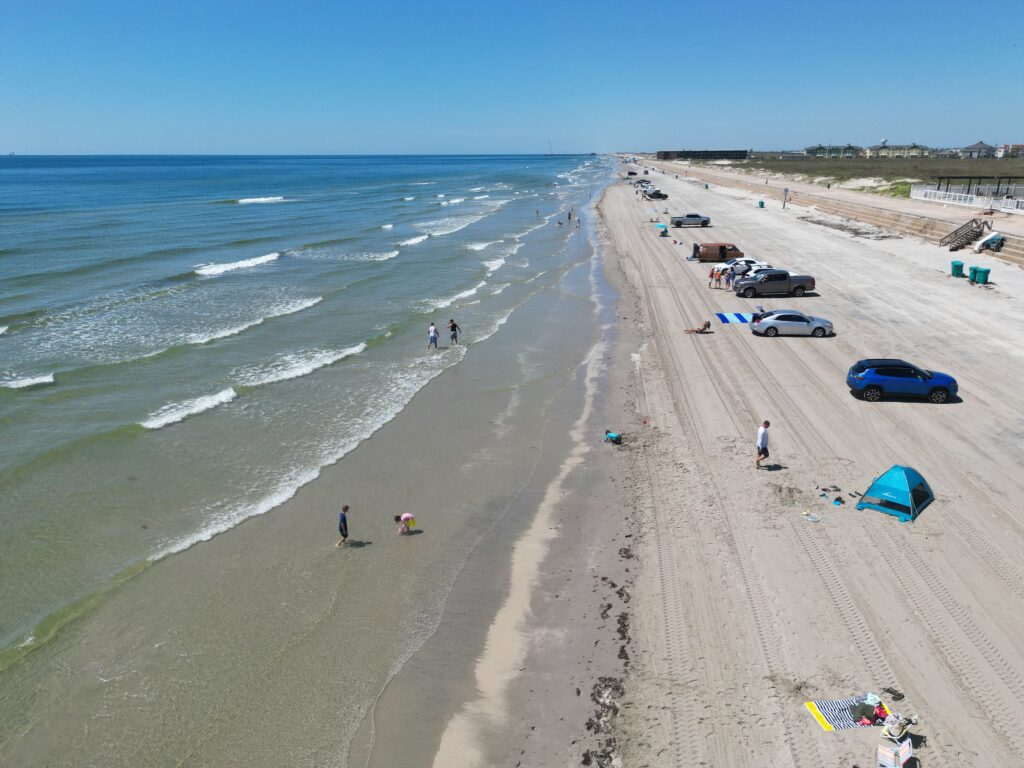
Across the ferry from Galveston (or via Highway 87/124), Crystal Beach offers the classic Texas beach house experience — stilted homes, wide beaches, less development, more space.
- Best for: Investors targeting the high-ADR beach house segment; 3–5+ bedroom family rentals
- Property types: Single-family beach houses, often newer construction or recently renovated
- Relative price tier: Moderate to high (varies significantly by Gulf proximity and lot size)
- Considerations: Ferry access can be a bottleneck during peak season (45-minute waits common in summer); fewer restaurants and amenities; more remote feel is both a feature and a limitation
The buyer’s market opportunity:
Galveston has experienced a notable selloff of STR properties since 2023. Many investors who purchased during the pandemic boom — often at inflated prices with unrealistic revenue expectations — are now listing properties for sale. This has created a buyer’s market with motivated sellers, price reductions, and negotiating leverage that hasn’t existed since pre-2020.
For investors buying today, this means:
- Better acquisition prices relative to revenue potential
- More inventory to choose from with less competition from other buyers
- Opportunity to negotiate — seller concessions, price reductions, and favorable terms
- Properties that may have been cash-flow negative for overleveraged pandemic buyers can work at today’s lower purchase prices
Galveston/Crystal Beach Short Term Rental Regulations
State of Texas
- Texas has no state income tax — rental income is not taxed at the state level
- Texas Hotel Occupancy Tax (HOT): 6% on rentals of less than 30 consecutive days
- Must collect and remit HOT to the Texas Comptroller
Galveston County / City of Galveston
- Local Hotel Occupancy Tax: Typically an additional 7% for City of Galveston, plus county portion.
- Combined tax burden on STR income: approximately 13–15% (state + local HOT)
- City of Galveston STR registration: Galveston has implemented STR registration/permitting
- Galveston has seen increasing regulatory attention to STRs in recent years — monitor local council actions
Bolivar Peninsula / Crystal Beach
- Crystal Beach (unincorporated Galveston County) has different regulatory requirements than the City of Galveston current Bolivar Peninsula STR regulations — typically fewer restrictions than City of Galveston
- County-level HOT applies
- Generally more permissive regulatory environment than City of Galveston
Insurance and hurricane considerations:
- Windstorm insurance is a significant cost factor — properties in Galveston County are in the Texas Windstorm Insurance Association (TWIA) territory current TWIA requirements and rates]
- Flood insurance is required for most properties in FEMA flood zones — virtually all beachfront and near-beach Galveston/Crystal Beach properties
- Insurance costs (windstorm + flood + property + liability) can be one of the largest expense line items in this market
Financing a Galveston/Crystal Beach Short Term Rental
Conventional Investment Property Loans
- Down payment: Typically 20–25% for investment properties
- Rates: Investment property rates typically run 0.5–0.75% higher than primary residence rates
- Property types: Single-family beach houses generally qualify for conventional financing; condo financing depends on project warrantability current Fannie Mae guidelines
DSCR (Debt Service Coverage Ratio) Loans
- Qualification: Based on the property’s projected rental income rather than personal income
- Down payment: Typically 20–25%
- Important note for Galveston: The high seasonality of Galveston revenue means lenders may scrutinize income projections more carefully. Having 12+ months of actual rental history on the property (from the seller) strengthens the DSCR case significantly.
The buyer’s market financing angle:
In the current Galveston market, motivated sellers may be willing to offer seller concessions toward closing costs or rate buydowns. This can meaningfully improve your Year 1 cash flow. Work with your agent to explore concession opportunities — they’re more available now than in recent years.
What to budget for closing:
- Down payment (20–25%)
- Closing costs (typically 2–4% of purchase price)
- Furnishing budget ($10,000–$40,000+ depending on property size and condition)
- Operating reserve (3–4 months recommended — longer reserve than year-round markets due to winter slow season)
- Insurance funding (windstorm + flood + property may require upfront premium payment)
Galveston/Crystal Beach Short Term Rental Expenses
Typical expense breakdown:
Expense | Estimated Range | Notes |
|---|---|---|
Property Management | 20–30% of gross revenue | Full-service management is common for out-of-state investors |
Insurance (Total) | $5,000–$15,000+/yr | Windstorm (TWIA) + flood + property + liability — this is a major cost center in Galveston |
Property Taxes | Varies by assessed value | Texas has no state income tax but property taxes are relatively high] |
Utilities | $200–$450+/month | Electricity (AC in summer), water, gas, internet, cable |
Lawn/Exterior | $100–$300/month | Exterior maintenance, deck/stair maintenance for stilted beach houses |
Pool/Hot Tub | $125–$250/month | If applicable — not all Galveston properties have pools |
Supplies & Consumables | $100–$250/month | Guest supplies, cleaning supplies, replacements |
Platform Fees | 3–15% | Airbnb host fee ~3%; VRBO commission varies; direct booking costs vary |
Taxes (State + Local HOT) | ~13–15% of gross revenue | Texas state + local hotel occupancy tax |
Hurricane Prep/Repairs | Variable | Budget for annual hurricane prep, potential storm damage, and deductibles |
The insurance reality:
Insurance is the elephant in the room for Galveston investing. Between TWIA windstorm coverage, NFIP or private flood insurance, property/hazard insurance, and liability coverage, total annual insurance costs can reach $10,000–$15,000+ for a beachfront property. This is significantly higher than inland markets and can dramatically impact cash flow projections. Factor this into your analysis from Day 1 — don’t treat it as an afterthought.
Texas property tax considerations:
Texas compensates for no state income tax with higher property tax rates compared to states like Florida or Tennessee. Galveston County property taxes on a non-homesteaded investment property can be meaningful. However, you can protest your property tax assessment annually — and in a declining market, successful protests are common.
Net income expectations:
After all expenses, typical net income in Galveston runs 30–45% of gross revenue for a well-managed property, with the higher end achievable on larger properties that generate strong gross revenue. On a 3-bedroom averaging $49,040 gross, expect net income of roughly $14,700–$22,000/year before mortgage. Top-performing 5-bedrooms grossing $161,000–$180,000 can net $48,000–$81,000 before mortgage — but the expense load (especially insurance) is correspondingly higher.
Seasonality in the Galveston/Crystal Beach Market
Seasonality is the defining characteristic of Galveston STR investing. Understanding it — and pricing for it — is the difference between success and frustration.
Galveston’s demand calendar:
Peak season (highest ADR + occupancy):
- Memorial Day through Labor Day — this is the money season. June–August accounts for the majority of annual revenue.
- Spring break (March) — strong demand, particularly from Houston-area families
- Major event weekends — Mardi Gras! Galveston (February), Lone Star Rally (November), Dickens on the Strand (December)
Shoulder season (moderate demand):
- September–October — lingering warm weather, lower rates, decent occupancy
- March–May (non-spring-break weeks) — building demand as weather warms
Off-season (low demand):
- November–February — with the exception of event weekends, this is the quiet season. Occupancy drops significantly and ADR falls.
- Some properties effectively go dark for portions of winter, particularly Crystal Beach beach houses
What the numbers tell us:
Market-wide occupancy of 49–56% reflects this seasonal split. Properties may run 85–95% occupancy during summer months and 20–35% during winter months. The annual average smooths out what is actually a very lumpy income stream.
How to manage seasonality:
- Price aggressively in summer. Don’t leave money on the table during your peak months. Dynamic pricing tools are essential — summer weekends can command 2–3x your shoulder-season rates.
- Extend the shoulders. Pet-friendly policies, mid-week discounts, and targeting remote workers can help fill March–May and September–November.
- Accept winter reality. Don’t slash rates to nothing trying to fill December and January. Strategic pricing for event weekends (Dickens on the Strand, holiday getaways) combined with realistic expectations for quiet weeks.
- Budget annually, not monthly. Your summer months will look fantastic. Your winter months will look concerning. Judge the investment on the full 12-month cycle.
- Build reserves during peak. Set aside a portion of summer revenue specifically to cover winter mortgage payments and expenses. This is operationally critical.
Why Galveston/Crystal Beach Works for STR Investors
1. The Houston feeder market is massive
With 7+ million people living within a 60–90 minute drive, Galveston has one of the largest captive feeder markets in the country. Houston families don’t need to book a flight — they load up the car on Friday afternoon and they’re at the beach house by dinner. This proximity drives spontaneous weekend bookings that fill gaps in your calendar.
2. It’s a buyer’s market right now
The pandemic STR boom created an oversupply of overleveraged owners who are now selling. This means better acquisition prices, more negotiating power, and the ability to buy properties that can actually cash flow at today’s prices — unlike 2021–2022 when everything was overpriced.
3. No state income tax
Texas has no state income tax. Combined with federal STR tax benefits (cost segregation, bonus depreciation, the “short term rental tax loophole”), the tax picture is favorable for investors.
4. Massive ADR potential in larger properties
Five-bedroom beach houses averaging $630/night with top performers pushing higher — these nightly rates rival luxury beach markets at a fraction of the entry cost compared to 30A or Rosemary Beach. The per-night revenue potential is genuinely strong.
5. Crystal Beach offers a differentiated product
The Bolivar Peninsula beach house experience — remote, uncrowded beaches, stilted homes with Gulf views, the ferry ride as part of the adventure — is a product that doesn’t exist on Galveston Island proper. It commands premium rates and attracts loyal repeat guests.
6. Multiple demand drivers beyond the beach
Galveston isn’t just a beach destination. Moody Gardens, Pleasure Pier, the Strand historic district, cruise ship port, Schlitterbahn Waterpark, UTMB, Mardi Gras, and a packed events calendar provide demand beyond pure beach season.
Common Mistakes in Galveston/Crystal Beach STR Investing
1. Underestimating seasonality
The single biggest mistake. Investors see a 5-bedroom generating $15,000 in a July month and project $180,000/year. That July is not representative. Budget for 12 months of reality — including winter months that may produce $2,000–$4,000 or less. Use annual projections, not peak-month extrapolations.
2. Ignoring insurance costs
Windstorm, flood, property, and liability insurance in Galveston County can total $10,000–$15,000+/year. Investors who run cash flow projections without accurate insurance estimates get ugly surprises. Get insurance quotes before you close — not after.
3. Buying at pandemic prices
If you’re looking at a property the seller purchased in 2021 at an inflated price, they may be anchored to their purchase price. Don’t pay for their mistake. Analyze the deal based on today’s revenue data and today’s expense reality. The buyer’s market exists because previous prices were wrong.
4. Ignoring hurricane risk
Galveston has been hit by major hurricanes (Ike in 2008, Harvey in 2017). Properties can sustain damage that takes months to repair — months when you earn zero revenue but still pay the mortgage. Budget for hurricane prep, carry adequate insurance, understand your deductibles, and build reserves for storm events.
5. Choosing the wrong property type for the market
One-bedroom Galveston condos are the most competitive, lowest-revenue segment ($22,060 average). Unless you find an exceptional deal at a very low price point, the return profile on small condos is challenging. The revenue math works better with larger properties that capture the high-value family and group bookings.
6. Not accounting for the ferry factor (Crystal Beach)
Crystal Beach properties require ferry access (or a long drive around). During peak summer weekends, ferry waits can exceed 45–60 minutes. Some guests love the adventure; others find it frustrating. This is a feature for some travelers and a dealbreaker for others — understand how it affects your booking profile.
7. Skipping the property tax protest
Texas allows annual property tax protests, and in a declining market, you have strong grounds for reassessment. Failing to protest means paying taxes on an inflated assessed value. Either protest yourself or hire a property tax protest firm (they typically work on contingency).